Before the Bulldozer: What Actually Happens to the Memorabilia When a Speedway Shuts Down
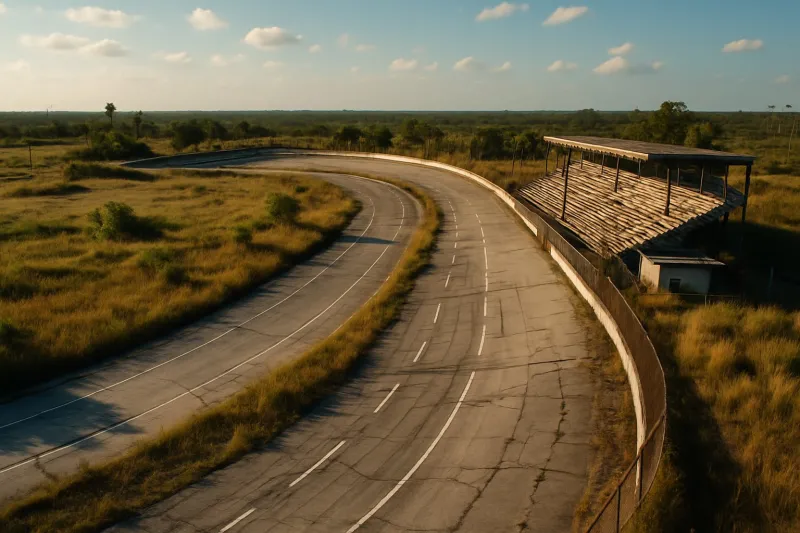
Photo: abandoned dirt racetrack oval empty grandstand overgrown, via koala.sh
There's a specific kind of silence at a racetrack that's been shut down. No PA announcer, no pit boards clattering, no smell of race fuel hanging over the turn three fence. Just weeds coming up through the apron and a scoreboard that still says something from the last race, frozen forever.
Across the United States, short tracks and even some bigger facilities have gone dark over the past couple of decades — squeezed by developers, sprawl, and the brutal math of keeping a racetrack profitable. And when the gates close for good, an odd little economy kicks into gear. Because a speedway isn't just a business. It's a warehouse full of artifacts, and somebody has to decide what happens to all of it.
The Auction Block
The first wave is almost always the sale of the fixtures. Promoters and property owners run liquidation auctions where the grandstand seating, the flag stands, the timing and scoring equipment, and sometimes literal chunks of the facility go to the highest bidder. For dedicated fans, these auctions are equal parts estate sale and funeral.
The most sought-after lots are rarely the expensive ones. It's the signage — the sponsor panels from the front stretch wall, the track's own logo sign that hung over the ticket windows for forty years. Those pieces carry the identity of the place, and collectors treat them accordingly.
Bricks, Benches, and Banners
What can a regular fan actually own? More than you'd think, and it breaks down into a few tiers:
- Track surface and wall sections. Pieces of asphalt from the racing groove, cut chunks of the retaining wall, and in some cases entire sections of barrier have been sold or given away when a track closes. There is nothing in motorsports collecting more literal than owning the turn a champion drifted through.
- Signage and fencing. Smaller sponsor signs, section markers, and even segments of catch fence show up at auctions and, later, on the secondary market.
- Souvenir stock. Unsellable t-shirts, hats, and program inventory from the track's gift shop often gets bought in lots and dribbled out over years. A dead stock t-shirt from a closed oval is a time capsule with sleeves.
- Paper. Ticket stubs, pit passes, entry blank forms, and season schedules. Cheap, abundant at the time, and increasingly scarce now. Paper is the most affordable way in.
- The weird stuff. Trophies from weekly divisions, the flagman's flags, the concession stand's menu board. Every closed track produces artifacts nobody predicted would matter.
Why the Emotional Weight Is Real
Here's the thing that separates track artifacts from most racing memorabilia: they're not tied to a person. They're tied to a place. A diecast can be reprinted; a chunk of the front stretch wall cannot. When the track is gone, the supply is permanently closed, and every collector in that track's community knows it.
That's why pieces from shuttered ovals tend to punch above their weight. A banner from a defunct half-mile where a NASCAR champion cut his teeth isn't just decoration — it's a claim on local history, the kind of thing that hits hardest when it hangs in a garage thirty minutes from where it used to fly.
Buying Smart, Buying Right
A word of caution from the counter: verify before you buy. Legitimate track artifacts usually come with some paper trail — an auction receipt, a letter from the promoter's family, a photo of the piece in situ. The secondary market has no shortage of "game-used" bricks of suspiciously fresh origin. Ask where it came from and who handled the sale. Reputable sellers expect the question.
And if you ever get the chance to attend a liquidation auction at a track in its final days, go. Bring cash, bring a truck, and bring a little emotional reserve — because you will end up buying something you didn't plan on, and you won't regret a single dollar of it.
The bulldozer doesn't care about history. But the people who show up afterward? They're the ones who keep it.