Silver Trophies, Golden Returns: Why Near-Miss Championship Gear Is the Collector's Secret Weapon
There's a moment that every hardcore racing fan knows by heart. It's not the victory burnout or the confetti-soaked trophy presentation. It's that split second on the final lap of a season — or sometimes the final corner of a single race — when everything that could have been suddenly becomes everything that wasn't. That gut-punch feeling? Collectors have figured out how to bottle it, and right now it might be the most undervalued currency in the memorabilia market.
At Last Lap Corner Store, we've watched this trend build for years. The casual fan still reaches for championship-year jackets and winner's-circle signed prints. But the serious collectors — the ones who treat their shelves like a portfolio — they've been quietly pivoting toward a different kind of hardware. Runner-up gear. Near-miss season merchandise. Technical data sheets from cars that finished P2 by a tire's width. The stuff that makes your stomach drop every time you look at it.
The Emotional Premium Nobody Talks About
Here's the counterintuitive part: championships are, in a weird way, resolved stories. The tension is gone. The champion got the crown, the parade, the legacy. But a near-miss season? That story never really ends. Every time you pull out a race suit from a driver's career-best campaign that still didn't land the title, you're reopening a wound that motorsports history refuses to stitch closed.
Dealers who've been in the game for decades will tell you the same thing: scarcity drives price, but emotion drives demand. And nothing in this sport generates sustained emotional demand quite like a season that ended one point, one mechanical failure, or one controversial call short of glory.
Think about some of the most talked-about near-misses in American racing history. Drivers who dominated stretches of a season, set records, and still walked away without the hardware. Their merchandise from those specific years tells a more complicated story than any championship banner could. And complicated stories, it turns out, are worth paying for.
Why the Numbers Favor the Runner-Up
From a pure supply-and-demand standpoint, championship gear gets produced in volume. Manufacturers know a title is coming (or at least hedge their bets), retail partners stock up, and commemorative items flood the market. The winning driver's face is everywhere. Prices start high and often plateau — or even soften — because the market gets saturated fast.
Runner-up season merchandise operates on completely different economics. Production runs are smaller because nobody was betting on that driver finishing second in the standings. Team-issued items — fireproof suits, gloves, helmets, pit boards, technical documentation — weren't manufactured with the collector market in mind. They were made to do a job. That means fewer of them exist, and the ones that do carry an authenticity that no commemorative print run can replicate.
When a driver who finished second in points eventually retires or passes away, the demand curve for that specific season's gear spikes hard. Suddenly everyone who watched those races wants a piece of the "what if" era. But the supply hasn't grown — it's actually shrunk, because items get damaged, lost, or permanently locked into private collections.
Case Studies Worth Studying
Without naming specific drivers (because values shift and we're not in the business of giving financial advice), look at the broader pattern. Across NASCAR, IndyCar, and IMSA, the seasons where a fan-favorite driver came agonizingly close to a title consistently outperform their actual championship years at auction — sometimes by significant margins — within a decade of the events.
The reasoning collectors give is almost always the same: the championship year feels finished. The near-miss year feels alive. One collector we spoke to described it as the difference between owning a photograph of a finished painting versus owning a sketch of a masterpiece that never got completed. Both are valuable, but only one makes people stop and wonder.
Technical items amplify this effect dramatically. A data printout from a car that led the championship standings heading into the final race — before a mechanical DNF ended the dream — carries a narrative weight that no trophy replica can match. You're holding proof of what was possible. That's a different category of object entirely.
What to Actually Look For
If you're thinking about building a collection around this concept, here's where experienced buyers tend to focus their energy:
Race-used team gear from the specific near-miss season. Not licensed replicas — actual pit crew shirts, team-issued jackets, and driver-worn items from that calendar year. The more provenance documentation you have, the better.
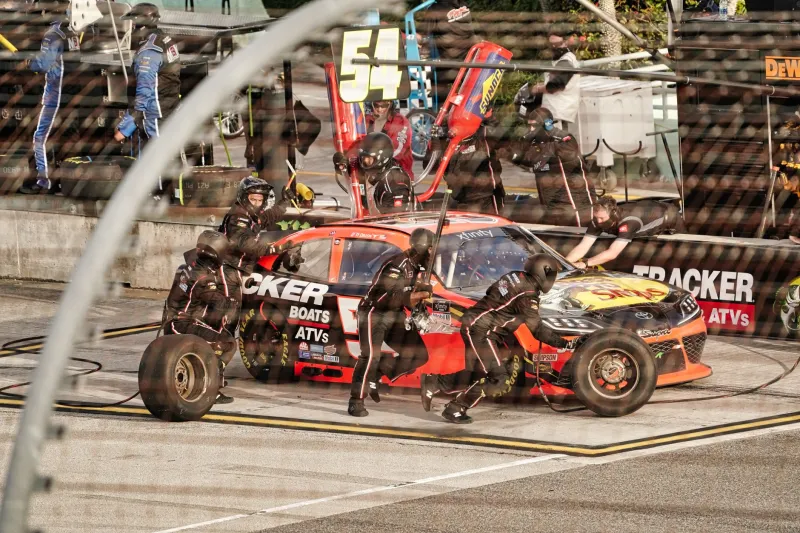
Technical and operational items. Pit boards, strategy sheets, timing printouts, and engineering documents from that season. These rarely make it out of team facilities, which is exactly what makes them valuable when they do.
Sponsor-issued and team-distributed merchandise. The stuff that was made for insiders, not retail shelves. Hat quantities were small. Jacket runs were limited. These items weren't printed with "collector's edition" stamped on the tag — which is precisely why they've become collector's editions by default.
Photography and media documentation. Official race-day photographs from the specific events where the championship slipped away. Not the victory celebrations — the moments of near-glory that the cameras caught in real time.
The Long Game
Collecting runner-up gear isn't about rooting against champions. It's about recognizing that motorsports history is made of more than winner's circles. The sport's richest stories — the ones that get retold at every corner store, every garage, every late-night fan forum — are almost always the ones that ended just short of perfect.
At Last Lap Corner Store, we've always believed that the best collections tell a story that goes beyond the record books. Championship gear tells you who won. Near-miss gear tells you something more complicated, more human, and ultimately more compelling: it tells you what the sport cost somebody, and how close greatness came to being even greater.
That's the kind of story worth putting on your shelf. And right now, before the rest of the market fully catches on, it might also be the kind of story worth investing in.