Crew Over Driver: Why the Smartest Collectors Are Chasing Team Gear Instead of Autographs
Walk into any serious racing memorabilia conversation and it usually starts the same way — somebody name-drops a signed firesuit, a race-used helmet, or a framed photo of a famous driver crossing the finish line. Driver gear has been the backbone of collecting culture for decades. But spend some time digging through what's actually moving at auctions and private sales right now, and a different story starts to emerge.
Team gear — crew shirts, pit box artifacts, over-the-wall equipment, and garage-issued tools — is quietly outpacing a lot of driver-centered merchandise in terms of both demand and price stability. And the collectors who figured this out early? They're sitting pretty.
The Shift Nobody Saw Coming
For a long time, the logic was simple: fans connect with drivers, so driver stuff sells. That's still partially true. But the market has gotten more sophisticated, and with that sophistication comes a different kind of buyer.
Today's serious collector isn't just grabbing whatever has a famous name on it. They're thinking about scarcity, storytelling, and long-term value. And when you start applying those criteria, team gear starts looking really attractive.
Take a crew shirt from a championship-winning season. There's a finite number of those. The team issued them to a specific group of people — mechanics, tire changers, jackmen, fuel guys. Once those shirts leave the garage, that's it. No reprints, no licensing deals, no mass-market version. Compare that to a driver's autograph, which can be reproduced hundreds of times over a single weekend appearance, and suddenly the math changes.
"People underestimate how rare genuine team-issued equipment actually is," says one longtime dealer who operates out of the Southeast and has been moving racing collectibles for over 20 years. "A driver can sign a thousand cards at a fan event. A crew chief's game-worn radio headset from a Daytona 500 pit box? There's one of those. Maybe two if the team kept a backup."
The Emotional Pull of the Pit Lane
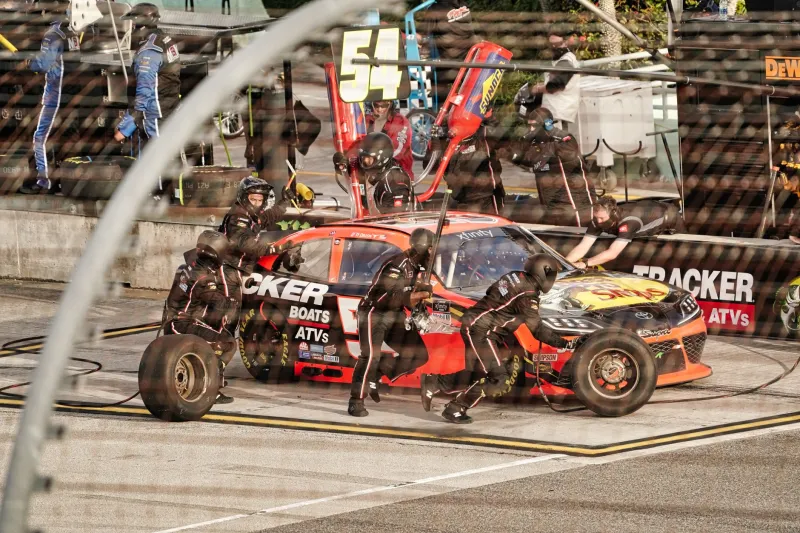
There's also something genuinely compelling about the human element of crew gear that driver merchandise sometimes lacks. When you hold a firesuit worn by an over-the-wall tire changer, you're holding a piece of a story that most casual fans never see. The driver gets the trophy, but the crew makes the win possible — and collectors who understand racing at a deeper level know that.
This emotional connection runs especially deep for fans who've spent time near pit lane or who grew up watching races from the infield. They know what it means when a pit stop goes perfectly. They know the difference between a clean fuel drop and a chaotic one. For those fans, a piece of crew gear isn't just memorabilia — it's a tribute to a part of racing that doesn't get nearly enough respect.
One collector based in North Carolina, who started buying crew equipment about eight years ago, put it this way: "I have a signed photo from one of the biggest names in NASCAR history. I love it. But when I look at a set of pit crew gloves from a championship team, I feel something different. Those gloves were in the mix when history was being made. There's grit in those things. Literally and figuratively."
What's Actually Selling
So what kinds of team gear are collectors going after? The list is broader than you might think.
Crew firesuits and shirts are the obvious starting point, especially anything tied to a specific race or championship season. The more provenance, the better — documentation that places the item at a particular event adds serious value.
Pit box equipment is an emerging category that's gaining steam fast. Timing monitors, radio equipment, and even the physical hardware used to organize the pit box during a race weekend have found their way into serious collections. These are items that most fans don't even think about, which is exactly why they're interesting.
Over-the-wall tools — tire irons, air guns, fuel cans — are another strong category. These are functional objects that were in the action, not sitting in a display case. That physicality resonates with a certain kind of collector.
Team-issued garage signage and internal documents round out the picture. Race strategy sheets, pre-race notes, and even team-specific communication materials have started appearing at auction, and they're drawing real interest.
The Investment Angle
Let's talk money for a second, because that's part of the conversation whether collectors like to admit it or not.
Driver memorabilia has always been subject to the volatility that comes with celebrity. A driver has a bad season, retires under complicated circumstances, or gets caught up in controversy, and the value of their signed gear can fluctuate significantly. The market for any individual driver's stuff is tied directly to how that driver's legacy holds up over time.
Team gear operates differently. A championship crew shirt doesn't care what the driver does five years after the fact. The historical moment is baked in. The 2011 Hendrick Motorsports crew doesn't become less significant because of what happened in 2018. The artifact holds its story independently.
Dealers who specialize in team equipment consistently point to this stability as a major selling point. "Driver stuff can spike and crash," one dealer noted. "Team gear tied to a specific historical result tends to hold its floor better. It's not immune to market shifts, but it's less reactive."
How to Start Collecting Team Gear
If you're thinking about getting into this category, there are a few things worth keeping in mind.
First, provenance is everything. Team gear without documentation is significantly harder to authenticate and sell down the road. Look for items that come with letters of authenticity, team records, or clear chain-of-custody documentation.
Second, know your era. Different decades of racing produced different types of crew equipment, and the collector community has different levels of interest in different periods. Do your homework on what's generating the most activity right now.
Third, build relationships. This market is still relationship-driven in a way that driver autograph collecting isn't. Knowing the right dealers, attending the right events, and staying connected with people who have access to team sources makes a real difference in what you're able to find.
At Last Lap Corner Store, we've watched this shift happen in real time. The collectors who come in asking about team gear are a specific breed — knowledgeable, patient, and serious about the long game. They're not chasing the flashiest name on the shelf. They're chasing the story behind it.
And honestly? That's the most interesting kind of collecting there is.