Almost Doesn't Count — Until It Does: The Collector's Case for Runner-Up Racing Gear
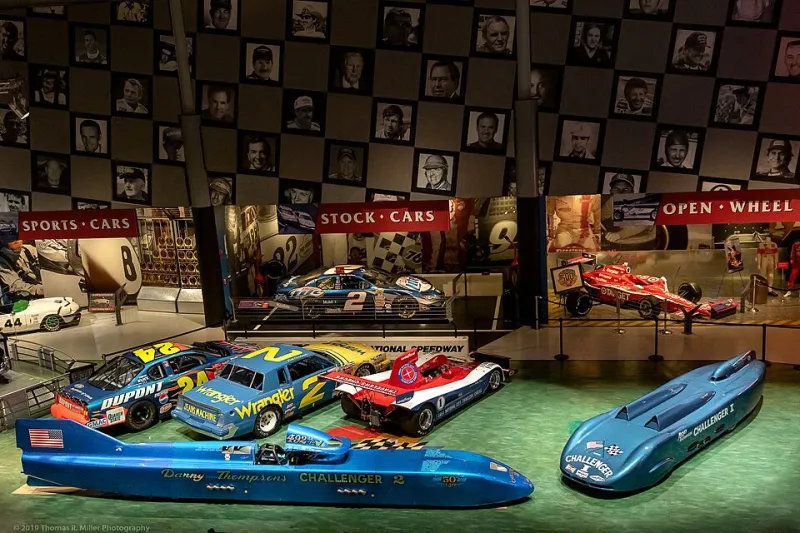
Photo: WillRStroh97, CC BY-SA 4.0, via Wikimedia Commons
There's an old saying in racing: second place is the first loser. It's a brutal line, and honestly? The collectibles market has believed it for decades. Championship gear gets the spotlight, the auction catalog covers, and the eye-popping hammer prices. Meanwhile, runner-up memorabilia sits in the background, quietly waiting for someone to notice.
Some collectors have noticed. And they're not exactly advertising it.
The Overlooked Shelf
Walk through any serious racing memorabilia collection and you'll spot a pattern pretty quickly. The centerpiece items — the framed race suits, the signed helmets, the trophy replicas — almost always belong to winners. Championships. Record-setters. The moments everyone already knows.
But spend enough time in this hobby and you start to realize something: the stories that haunt motorsports history are rarely the clean victories. They're the near-misses. The mechanical failures on the final lap. The photo finishes that went the wrong way. The drivers who spent entire careers knocking on the door without ever quite breaking through.
That emotional weight — the what-if, the heartbreak, the resilience — is sitting right there in second-place finisher gear, priced like nobody cares.
Why the Gap Exists
The undervaluation of runner-up memorabilia isn't irrational, exactly. It's just incomplete.
Collectors, especially newer ones, naturally gravitate toward the most legible story. Winner equals value. That's easy to explain, easy to display, easy to brag about. "I own a piece from the race Jeff Gordon won" lands differently at a dinner party than "I own gear from the guy who finished second to Jeff Gordon."
But that framing ignores a few things that experienced collectors understand pretty well:
Scarcity works both ways. Championship gear gets chased hard. The market for it is competitive and well-documented. Runner-up items from the same era often exist in similar quantities but attract a fraction of the buyer interest — which means you're frequently paying 20 to 40 cents on the dollar for comparable rarity.
Stories evolve. The narrative around a race doesn't stay frozen. A driver who finished second in a championship fight might go on to become a beloved figure, a tragic story, or a cult hero. When that happens, the market catches up fast — and the people who bought early are sitting on serious upside.
Context creates value. A runner-up finish in a race that later becomes historically significant can be worth more than a win in a race nobody remembers. The 1979 Daytona 500 runner-up finish means more than winning a forgettable mid-season plate race in 1991. Context, not just outcome, drives long-term value.
Case Studies Worth Knowing
You don't have to look hard to find examples of runner-up narratives that eventually commanded serious collector attention.
Dan Gurney is a great one. Widely regarded as one of the most talented American drivers of his era, Gurney never won the Indianapolis 500 despite multiple strong finishes. His near-misses at Indy are a defining part of his legend — and gear from those campaigns has appreciated considerably as his reputation has been reassessed by a new generation of fans discovering sports car and Formula racing history.
Dick Simon. Willy T. Ribbs. Roberto Guerrero. These are names that serious Indy collectors know well precisely because their near-misses created stories that outlasted plenty of forgettable wins.
In NASCAR, think about the drivers who spent years running second in the championship standings, always the bridesmaid. Their gear rarely commanded top dollar during their careers. But as the sport's history gets documented more thoroughly — through podcasts, YouTube channels, and streaming series — casual fans are turning into researchers, and researchers become buyers.
How to Build a Smart Runner-Up Collection
If this angle appeals to you — and it should — here's how to approach it without just randomly buying cheap stuff and hoping for the best.
Focus on historically significant races, not just drivers. A second-place finish at the Daytona 500, the Brickyard 400, or the Southern 500 carries inherent weight regardless of who finished there. Gear tied to those events has a floor that generic race-weekend items don't.
Look for compelling personal narratives. The most valuable runner-up stories are the ones with emotional texture. A driver who led 490 laps of a 500-lap race before a tire let go. A championship that came down to points in the final race. These aren't consolation prizes — they're the dramatic spine of the sport's history.
Don't sleep on third place. The podium extends past second, and third-place finishes are even more neglected by the mainstream market. Some of the best value in this entire collecting category is sitting right there.
Authenticate with the same rigor you'd apply to wins. Just because something is cheaper doesn't mean documentation matters less. Provenance is everything, regardless of where the car finished.
The Patience Play
Let's be honest about one thing: collecting runner-up memorabilia is a long game. You're not buying something the market already agrees is valuable. You're positioning ahead of a narrative shift — betting that the story will eventually catch up to the artifact.
That requires patience and some genuine knowledge of racing history. You need to know which near-misses actually matter, which drivers are underappreciated by current market conditions, and which races have the kind of historical significance that tends to appreciate over time.
It also helps to stay plugged into the collector community. When a documentary drops about a forgotten driver, when a vintage race gets re-aired on cable, when a journalist writes a deep-dive retrospective on a legendary near-miss — those are the moments when casual interest spikes and prices follow. Being already positioned when that happens is the whole game.
The Corner Store Angle
Here at Last Lap Corner Store, we've always believed that the best stuff in racing isn't always the stuff on the podium's top step. The sport's richest stories live in the margins — the drivers who gave everything and came up just short, the races that turned on a single moment, the careers defined by what almost happened.
If your garage or collection space tells only the story of winners, you're missing half the history. And if you're thinking about this from an investment angle, you might be missing your best opportunity. The market for champions is crowded. The market for compelling near-misses? Still wide open. Pull into that pit lane before everyone else figures it out.