Worn In, Not Worn Out: How Experts Authenticate Race-Used Driver Gear
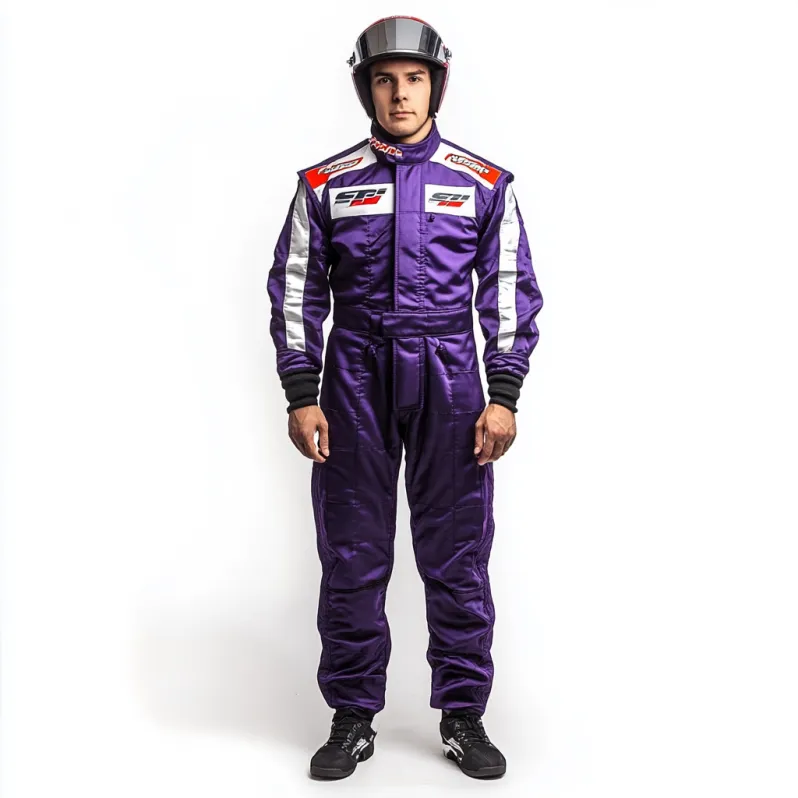
Photo: racing driver firesuit helmet authentication close up detail vintage motorsport gear, via racequip.usabrandsmart.com
Pick up a firesuit that supposedly belonged to a famous driver and you're holding something that feels almost alive with history. The scorch marks, the sweat stains, the fraying at the cuffs — every detail tells a story. The problem is, anyone with enough time and the right materials can tell a fake story just as convincingly. In the world of driver-worn racing gear, the difference between a $200 reproduction and a $15,000 authentic piece can be invisible to the untrained eye.
So how do the experts actually tell them apart?
Why Driver-Worn Gear Commands the Premium It Does
Before getting into the mechanics of authentication, it's worth understanding why driver-worn equipment sits at the top of the motorsports collectibles pyramid in the first place.
A signed poster is cool. A die-cast is nostalgic. But a firesuit that was actually wrapped around a driver's body during a championship run? That's a physical artifact of history. It carries a kind of tangible connection that reproductions — no matter how accurate — simply cannot replicate. Collectors call it "game-used" in other sports, and the premium it commands over unsigned merchandise is enormous and well-established.
For racing specifically, the gear is also inherently unique. Firesuits are custom-fitted to individual drivers. Helmets are custom-painted and fitted to specific head shapes. Boots are broken in over time to match a driver's foot. All of those custom details become authentication tools when you know what to look for.
The First Line of Defense: Provenance Documentation
Authentication experts will tell you that the paper trail matters as much as the physical object — sometimes more. A piece with airtight provenance documentation is significantly easier to verify and command a premium price.
What does strong provenance look like? It starts with a clear, unbroken chain of custody. Ideally, that means a letter on team letterhead confirming the gear was worn during a specific race or season, signed by a team official or crew chief. It might include photographs of the driver wearing the specific item — ideally dated and cross-referenced with known race footage. It could also include a direct purchase receipt from the driver's personal management or official estate.
When provenance documentation is thin or absent, authenticators have to lean much harder on physical evidence. That's where things get genuinely forensic.
Reading the Wear: What Physical Inspection Actually Reveals
Authentic race-worn gear carries wear patterns that are remarkably difficult to fake convincingly — because they're the result of real use under real conditions.
Firesuits develop wear in very specific, predictable places. The seat and inner thigh areas show abrasion from the cockpit seat surface. The collar shows wear from helmet contact. The wrists and ankles show wear from glove and boot overlap. Authentic perspiration staining follows the body's sweat patterns — heavier under the arms, across the back, at the collar. Forgers who artificially age suits often get the distribution wrong, creating staining that looks uniform or appears in places that don't make physiological sense.
Thread wear is another tell. On an authentic suit, the Nomex fabric shows fatigue in places that experience repeated flexion — the elbows, the knees, the back of the knees. Artificial aging tends to produce surface-level distressing that doesn't penetrate the weave the way genuine wear does.
Helmets are arguably the most scrutinized piece of driver gear, partly because they're the most visually iconic and partly because they're among the most frequently faked. Authentic race-used helmets show specific wear patterns on the chin strap hardware, the visor mounting points, and the interior padding. The interior foam and padding compress and conform to the driver's specific head shape over time — a detail that's nearly impossible to replicate artificially.
Paint and decal wear on helmets follows a predictable pattern based on how the helmet moves inside the car and how it interacts with the HANS device. Authenticators look at whether the wear on sponsor decals is consistent with the direction of friction the helmet would actually experience. Fakes often show wear that's either too uniform or appears in the wrong locations.
Boots are perhaps the most underrated authentication subject. Race boots develop wear on the sole based on the driver's specific pedal technique — heel-toe braking leaves very different marks than left-foot braking. The toe box shows wear from contact with the pedal face. Interior wear mirrors the driver's foot shape and pronation pattern. These details are nearly impossible to fake without access to the driver's actual foot and driving style.
Manufacturing Details: The Devil in the Stitching
Beyond wear patterns, authenticators examine manufacturing details specific to the era and manufacturer of the gear.
Firesuit manufacturers like Sparco, Alpinestars, OMP, and Simpson have changed their construction methods, label designs, and stitching patterns over the decades. An authenticator who knows that a particular manufacturer switched from a specific type of collar construction in 1998 can immediately identify a suit that's been misdated. Label fonts, label placement, internal tag details, and zipper hardware all vary by year and manufacturer — and all of that information is documented by serious authenticators.
Helmet manufacturers present similar forensic opportunities. Bell, Arai, and Shoei have each gone through multiple design generations, and the specific models used in specific racing series during specific years are well-documented. A helmet that's supposedly from a 1994 race but features hardware that wasn't introduced until 1997 is a red flag that experienced eyes will catch immediately.
Common Forgery Techniques and How They Get Caught
The most common forgery approach is taking a legitimate, period-correct item and adding false attribution — putting a famous driver's name on gear that belonged to a lesser-known competitor, or adding signatures that weren't originally there. These fakes are often the hardest to catch because the underlying item is genuinely old and correctly manufactured.
Signature analysis is its own subspecialty. Forgers who add signatures to authentic gear often study a driver's autograph carefully, but they miss subtle details — pen pressure variation, the natural hesitation at the start of certain letters, the way a signature changes when signed quickly versus slowly. Handwriting experts and signature specialists can often identify forgeries through these micro-details.
Another common technique is combining authentic elements — a real helmet liner, a real visor, a real exterior shell — from different sources to create a composite piece that appears to be a single, complete race-used item. Cross-referencing the wear patterns between components can reveal when parts don't match.
The Bottom Line for Collectors
If you're looking to add driver-worn gear to your collection, the rule is simple: buy the documentation as much as you buy the item. Pieces with strong, verified provenance from reputable sources — direct from teams, through established estate sales, or from major auction houses with their own authentication processes — are worth the premium they command.
For anything outside that chain, consult a specialist before committing significant money. The forensic tools available to serious authenticators today are genuinely impressive, and a professional evaluation is cheap insurance against a very expensive mistake.
The real stuff is out there. And when you find it — documented, verified, and undeniably authentic — there's nothing else like it in the collecting world.