Pocket Change to Payday: How a Five-Dollar Diecast Turns Into a Five-Figure Collection
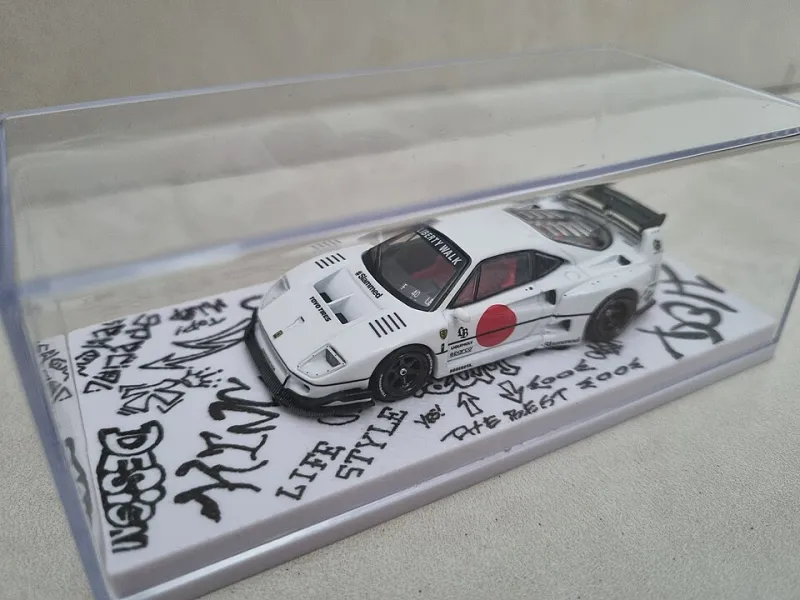
Photo: BenedictLiang, CC0, via Wikimedia Commons
Walk into Last Lap Corner Store on any given Saturday and you'll see it happen in real time: a kid drags a parent over to the diecast pegs, grabs a 1:64 scale stock car, and five minutes later the parent is asking us which ones "get valuable." It's the same question that launched half the great collections in American motorsports fandom.
Diecast is the gateway drug of racing collecting. The barrier to entry is a cup of gas station coffee, and the ceiling is genuinely staggering — rare 1:64 releases from the 1990s have traded for more than a used pickup truck. But not every peg hunter ends up with a treasure. The difference between a shoebox of dust magnets and a collection worth insuring comes down to a few habits you can start this weekend.
Why Small Scale Hits Different
There's a reason 1:64 dominates the entry point. The price sits low enough that nobody needs permission from their wallet, and the footprint means you can store fifty cars in a single shoebox. You can chase an entire driver's career — paint schemes, sponsors, one-off tributes — without dedicating a spare bedroom to the cause.
But accessibility isn't the whole story. Small scale cars capture the same history as their 1:24 and 1:18 siblings: the special paint schemes, the championship editions, the cars that never turned a lap in competition but became fan favorites anyway. When a driver wins a marquee race or announces a farewell tour, the small stuff moves first because it's what most fans can actually find and afford.
The Releases Worth Hunting
Not all diecast is created equal, and the pegs will happily sell you peg warmers all day long. A few categories tend to outperform:
- First cars and rookie schemes. A driver's earliest diecast is their rookie card. When someone breaks out, the supply of their early stuff is long gone.
- One-race wonders. Special paint schemes run once — tribute cars, all-star throwsbacks, promotional tie-ins — have built-in scarcity.
- Championship and milestone editions. First win, final win, title clinchers. Moments get remembered; ordinary Tuesday night races don't.
- Low-production numbered runs. Some small-scale releases are numbered to a few thousand or less. The serial number on the box is doing real work.
- Errors and variations. A misprinted decal or a corrected wheel detail can turn an ordinary car into a grail. Nobody plans for these; you just have to be paying attention.
Condition matters at every scale, but especially in small diecast where the blister card is half the value. A mint card with a clean bubble can be worth multiples of the same car with a crushed package.
The Beginner's Roadmap
If you're starting from zero, here's the play we give every newcomer who asks at the counter:
Step one: pick a lane. Collect one driver, one team, one series, or one era. Focus beats volume every single time. A deep Dale Earnhardt Sr. run from the 1990s tells a better story than two hundred random cars.
Step two: learn the manufacturers and their tiers. Different brands sit at different price points and production levels, and the same car can exist in a mass-market version and a hobby-exclusive version. The hobby-exclusive is the one you want.
Step three: buy the moment, not the hype. The cheapest a milestone car will ever be is usually right after it happens, while everyone assumes supply will meet demand. It rarely does.
Step four: protect what you buy. Acrylic cases, climate-stable shelving, and keeping cards out of direct sunlight cost almost nothing relative to what they preserve.
Step five: keep the receipts and the boxes. Provenance is the quiet engine of resale value, whether the box stays sealed or gets displayed.
The Long Game
Nobody's promising you a retirement fund from peg hunting — anyone who does is selling you something. But the pattern in diecast is remarkably consistent: the collectors who focused early, bought moments instead of shelf fillers, and kept everything clean and documented are the ones whose shoeboxes turned into display cases turned into serious appraisals.
And honestly? The money is the side quest. The real win is that a five-dollar car is the cheapest ticket in motorsports to owning a piece of the moment you watched live. Swing by the shop and we'll get you started — first peg is on us.