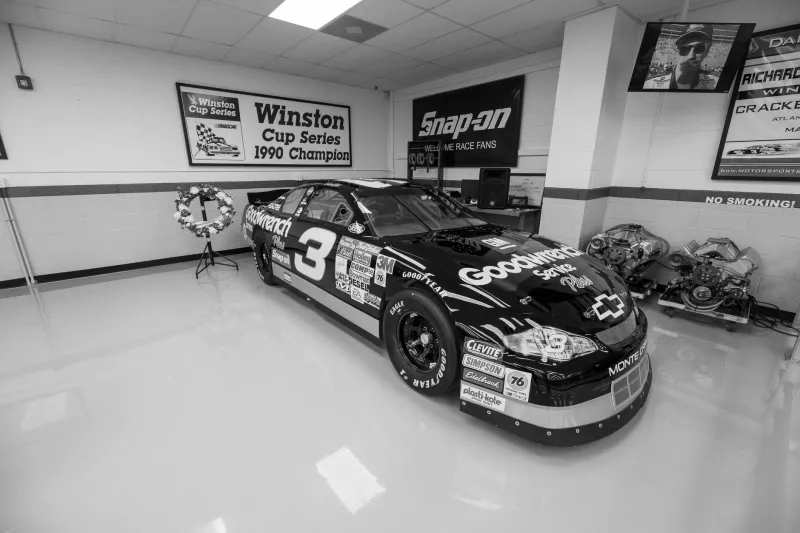
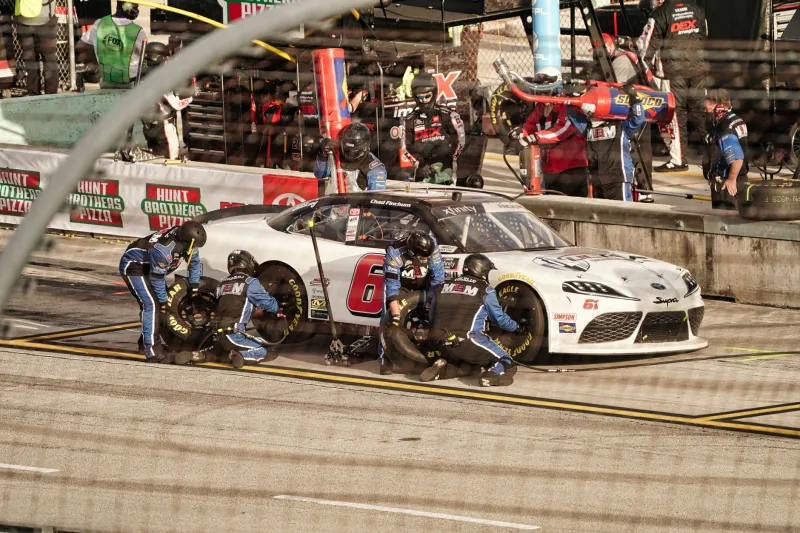
When the Helmet Comes Off for Good: The Surprising Reason Fans Go on a Buying Frenzy After a Driver Retires
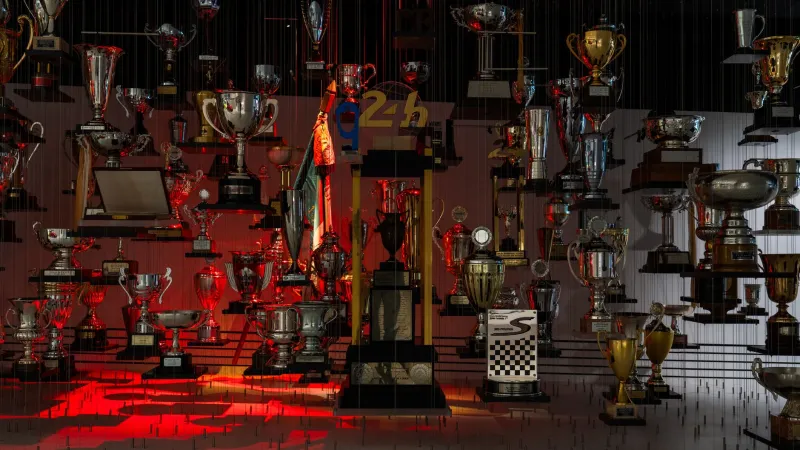
Here's something that'll mess with your head a little. A driver announces his final season. Maybe it's a tearful press conference, maybe it's a cryptic social media post, maybe the rumor mill just gets too loud to ignore. And right about the time that last checkered flag waves, something strange happens at shops like ours — the merch starts moving faster than it did when he was actively winning races.
Welcome to what we like to call the Last Lap Paradox.
It's counterintuitive, sure. But spend enough time talking to serious collectors and you start to realize this isn't an accident or a fluke. There's real psychology at work here, and understanding it changes the way you think about building a collection — and about what you might be sleeping on right now.
The Moment Scarcity Gets Real
When a driver is still racing, the future feels open-ended. There's always another season, another championship run, another chance to grab that signed die-cast or team-issued firesuit. Collectors operate with a kind of comfortable procrastination — I'll get to it eventually.
Retirement slams that door shut.
Suddenly, the supply of new, career-relevant memorabilia has a hard ceiling. No more race-worn gear from future events. No more fresh sponsor liveries. No more helmet designs tied to championship campaigns that haven't happened yet. What exists is what exists, and serious collectors feel that shift in their bones almost immediately.
"When my guy retired, I literally sat down and made a list of every piece I didn't have yet," says Marcus T., a NASCAR collector from Charlotte who's been building career retrospectives for over fifteen years. "It was like the clock started ticking the second he made the announcement. Things I'd been casually watching on the secondary market, I was suddenly buying within the week."
That urgency is completely rational, even if it feels emotional in the moment. The economics of scarcity are straightforward: fixed supply plus sustained demand equals rising prices. Waiting isn't a strategy — it's a gamble.
Nostalgia Hits Different When the Career Is Complete
There's another layer here that goes beyond supply and demand, and it's a little harder to quantify. When a driver is actively competing, your emotional connection to their memorabilia is tied to ongoing performance. A bad season can cool enthusiasm. A team change can make last year's gear feel stale. The story is still being written, which means it can go in directions you didn't expect.
Retirement closes the book. And a finished story is somehow easier to love completely.
Collectors start looking at a driver's full body of work — the early wins, the near-misses, the championships, the rivalries — as a single, coherent narrative. Memorabilia stops being merchandise and starts being chapters in a story you know the ending to. That framed photo from a 2009 midseason race that felt unremarkable at the time? Now it's part of a legacy. Context transforms everything.
"I never really thought about collecting his early stuff when he was still racing," admits Diana R., a road racing fan from Ohio who focuses on open-wheel drivers. "But once he retired, I started going back through his whole career and realizing how many incredible moments I'd just... glossed over. Building a retrospective collection became this whole project. It felt like honoring the complete picture."
That impulse — to honor the complete picture — is what drives a lot of post-retirement buying. Fans aren't just chasing nostalgia for nostalgia's sake. They're recognizing that the story is now fully told, and they want physical artifacts to represent it.
Legacy Recognition Kicks In (Sometimes Slowly)
Here's another wrinkle: retirement often triggers a broader cultural reassessment of a driver's place in history. The sports media does retrospectives. Podcasts dedicate episodes to career highlights. Social media fills up with throwback clips. Suddenly, a driver who felt like background noise during the grind of active competition gets reframed as a genuine legend.
For collectors, that shift in public perception matters. It validates the investment they've already made and creates urgency for the pieces they haven't picked up yet. Nobody wants to be the fan who didn't grab the career-defining memorabilia before the rest of the world caught up.
This is especially true for drivers who were consistently excellent without being flashy — the kind of competitor who racked up top-tens and quiet championships without generating massive mainstream buzz. Retirement has a way of making people reconsider those careers with fresh eyes, and the collector market responds accordingly.
Building a Career Retrospective: Where to Start
If you're thinking about putting together a serious retrospective collection for a recently retired driver, the approach matters. Here's how experienced collectors tend to frame it:
Anchor pieces first. Identify the two or three moments that define the career — a first championship win, a landmark race, a famous rivalry moment — and make sure you have strong representation of those. A race-used item or a piece with solid provenance from those specific events is worth prioritizing over a broader quantity of generic merchandise.
Think in eras. Most long careers have distinct phases — early years, peak performance period, late-career twilight. A complete retrospective should have representation across all of them, not just the highlight reel. Those early-career pieces are often the hardest to track down and the most rewarding to find.
Don't overlook the mundane. Team-issued gear, paddock passes, sponsor promotional items — the stuff that felt throwaway during the active career becomes genuinely interesting as part of a complete collection. It's the texture of a career, not just the trophies.
Document everything. Provenance is everything in this hobby. If you can trace a piece back to a specific event or verify its authenticity through a reputable source, that documentation becomes part of the item's value over time.
The Window Is Shorter Than You Think
One thing that catches newer collectors off guard is how quickly the post-retirement window closes. In the first year or two after a driver steps away, there's often a reasonable amount of inventory still moving through the market. By year three or four, the genuinely significant pieces have found permanent homes in serious collections, and what surfaces tends to be either lower-tier merchandise or items priced significantly higher than they were at retirement.
The fans who move deliberately in that initial window — who treat retirement as a starting gun rather than a finish line — consistently end up with the stronger collections.
So next time you hear that a driver you've followed for years is calling it a career, don't file it away as a sad sports story and move on. Take a hard look at your collection, figure out what's missing, and start filling those gaps. The Last Lap Paradox is real, and the collectors who understand it are always a few steps ahead of everyone else.
And if you need somewhere to start looking? Well — you already know where to find us.