Suits That Survived the Fire: The Untold Story of Pit Crew Uniforms as Serious Collectibles
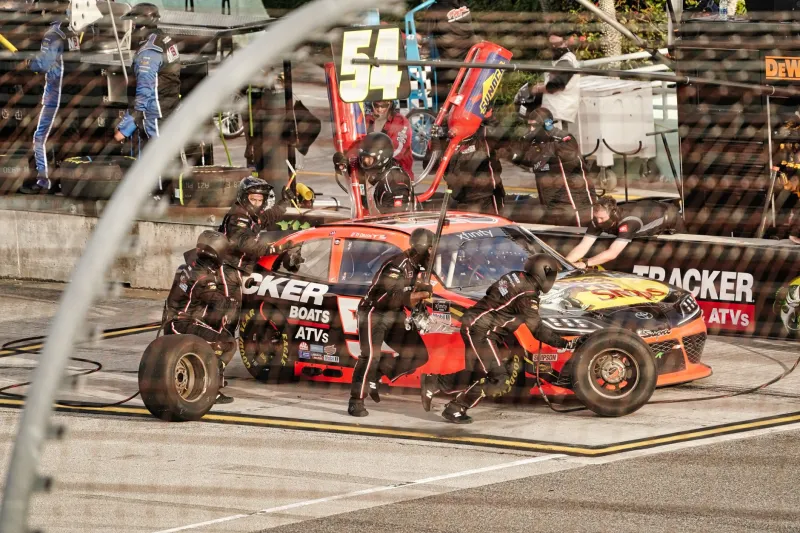
Everybody wants the driver's firesuit. The name on the back, the hero photo, the story that sells itself at auction. But walk past those display cases and head toward the corner of any serious collection, and you'll start noticing something different — the suits without the famous names. The ones worn by the guys who changed four tires in under twelve seconds while a 3,400-pound car idled three feet from their knees.
Pit crew uniforms are having a moment, and most collectors haven't caught on yet. That's exactly why right now is the time to pay attention.
Cotton, Canvas, and the Early Days of Pit Safety
Go back to the 1960s and early 1970s, and pit crews were working in gear that would make a modern safety inspector faint. Basic cotton coveralls, shop shirts, sometimes just street clothes. There were no unified team aesthetics, no sponsor branding requirements, and absolutely no flame resistance to speak of. The suits from this era that have survived in any kind of condition are genuinely rare — not because collectors sought them out, but because nobody thought to save them.
That scarcity is now working in favor of anyone who manages to track one down. A verified 1960s-era pit crew work suit from a recognizable team, even without a famous name attached, can command serious interest from collectors building period-correct garage displays. The condition bar is admittedly high because cotton degrades, but partial documentation — a team photo, a race program listing crew members — can bridge the gap.
By the mid-1970s, the industry began pushing toward basic flame-retardant materials following a series of high-profile pit lane incidents. These transitional-era uniforms, roughly 1974 through the early 1980s, represent a fascinating middle ground. They're more durable than the cotton predecessors, carry visible sponsor graphics that tie them to recognizable teams, and they're still undervalued because most buyers haven't made the connection between safety history and collectible value.
The 1990s Turbo Era and the Branding Explosion
If you want a crash course in why pit crew uniforms deserve a second look, study a photograph from a mid-1990s NASCAR or IndyCar pit box. The uniforms transformed from functional workwear into rolling billboards — and that's not a criticism. It's a windfall for collectors.
The 1990s brought multi-sponsor deals, bold color blocking, and embroidered patches that told the entire commercial story of American motorsport in a single jacket. Tobacco money, automotive parts giants, and regional brands all competed for real estate on crew gear. Many of those sponsors are now defunct or have completely exited racing, which is exactly what makes their branded uniforms valuable today.
A 1994 pit crew shirt carrying a logo from a sponsor that folded before Y2K isn't just a piece of clothing — it's a time capsule. Collectors who focus on defunct sponsor branding (a topic we've covered before here at Last Lap Corner Store) understand this instinctively. The 1990s crew gear sits at a sweet spot: old enough to feel historical, young enough to have survived in reasonable condition, and visually bold enough to anchor any display wall.
Authenticity markers to look for in 1990s crew gear include sewn-in team laundry tags (often stamped with crew member position), Nomex fabric labels from the original manufacturer, and sponsor patch layering that matches documented team photography from that season.
Early 2000s: When Crew Gear Got Technical
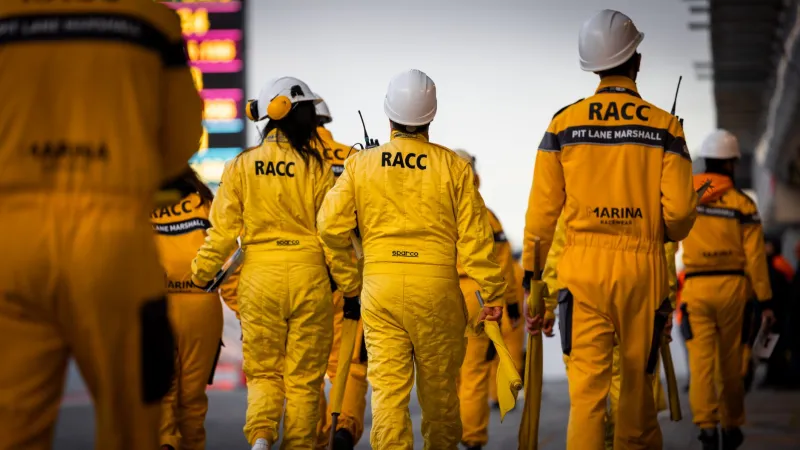
The turn of the millennium brought a serious rethinking of pit lane safety across every major series. Nomex construction became standard rather than optional. Gloves, shoe covers, and full balaclava systems turned the pit crew uniform into a coordinated protective package rather than just a jacket and pants.
For collectors, early 2000s crew gear offers a compelling entry point. Prices haven't spiked the way driver firesuits from the same era have. A complete early 2000s crew set — jacket, pants, gloves, and the balaclava — from a recognizable Cup Series team can still be found in the $200 to $600 range at specialist dealers and motorsport auctions, depending on team provenance and condition. Compare that to a driver suit from the same season and team, which might start at three times that figure before the auction even opens.
The key authenticity indicators for this era are manufacturer certification tags (SFI or FIA ratings printed inside the collar), individual crew position markings — tire carrier, jackman, fueler — which were increasingly standardized during this period, and the presence of team-specific numbering systems on interior labels used for inventory control during the season.
Why Crew Position Matters More Than You Think
Not all pit crew uniforms carry equal weight in the collector market, and position is a bigger factor than most buyers realize. The jackman and the front tire changer occupy the most dangerous real estate during a pit stop — closest to oncoming traffic, responsible for the fastest mechanical actions. Uniforms documented to these positions tend to carry a premium over, say, a catch can man's gear from the same team and season.
Over-the-wall crew suits — the seven or eight team members who physically cross the pit wall — are inherently more valuable than crew chief or spotter gear, simply because of the risk factor and the visual association with the action that fans actually watch. When you're building a collection or a display, that narrative matters.
Finding Crew Gear Before It Finds the Auction Block
The honest truth about pit crew uniforms is that most of them never make it to major auction houses. They get retired into team storage, passed along to crew members as keepsakes, or end up at regional swap meets and small specialty shops — places like Last Lap Corner Store, where the inventory actually reflects what's circulating in the real collector community rather than what's been professionally staged for a catalog.
If you're serious about building a crew gear collection, the strategies that work are consistent: build relationships with regional dealers, attend smaller motorsport swap meets where estate collections surface, and learn to read team photography from the seasons you're targeting so you can verify uniform accuracy against documented sources.
The collectors who got into driver gear early made serious returns. The collectors who started chasing pit crew uniforms five years ago are already seeing that same curve beginning. The question is whether you want to get there before the catalog prices catch up — or after.