Why Your Neighborhood Racing Shop Will Always Have the Edge Over the Big Guys
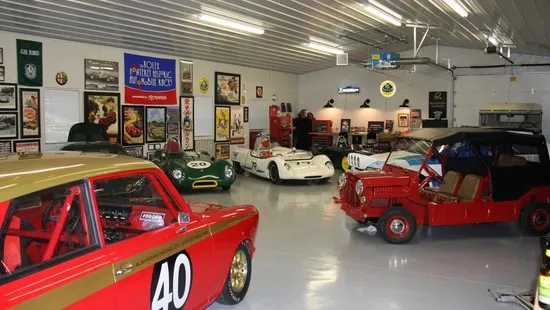
Photo: independent automotive shop owner vintage racing memorabilia store interior, via s3.us-east-2.amazonaws.com
Walk into a big box sporting goods store and ask someone where the race-worn memorabilia section is. Watch their face go blank. Maybe they'll point you toward a wall of licensed team t-shirts sandwiched between golf cleats and foam pool noodles. That's the experience millions of motorsports fans have quietly tolerated for years — and it's exactly why the independent racing shop isn't just surviving, it's thriving.
There's something happening at the grassroots level of American motorsports retail that the national chains simply haven't figured out how to replicate. Call it the corner store effect. The idea that a smaller, more focused operation — run by people who actually care about the sport — can outperform a corporate giant with ten thousand times the budget. It sounds counterintuitive. But spend five minutes talking to a serious collector or a weekend racer, and you'll hear the same thing over and over: I'd rather drive forty-five minutes to my guy than click through three hundred generic listings online.
It Starts With the Person Behind the Counter
The most obvious advantage independent shops have is the human element. When you walk into a boutique racing gear store, you're not getting a seasonal employee reading from a product description card. You're talking to someone who probably spent last weekend at a regional track, knows the difference between a 1980s IMSA livery and an early CART suit, and can tell you exactly why that particular set of lug nuts is significant.
That expertise is irreplaceable. Big retailers can train staff on SKU numbers and return policies. They can't train passion. They can't replicate the kind of institutional knowledge that comes from years of buying, selling, trading, and just living inside a very specific corner of automotive culture.
For collectors especially, this matters enormously. Authenticating memorabilia, understanding provenance, knowing which pieces are genuinely scarce versus artificially hyped — these aren't skills you pick up in a two-week onboarding program. They come from being embedded in the community for a long time.
The Curation Advantage
Here's something worth thinking about: a major online retailer might list fifty thousand motorsports-related products. Sounds impressive. But how many of those items are worth your time? How many are cheap knockoffs, generic fan gear with no real connection to the sport, or merchandise that's been sitting in a warehouse because nobody actually wants it?
Independent shops are forced to be selective. They don't have the shelf space or the capital to stock everything. That constraint turns into a genuine advantage. Every item in a well-run boutique racing shop earned its spot. The owner made a deliberate choice to carry it — because they know their customers, they know the market, and they know what has real value versus what's just taking up room.
That curation process is essentially a service. You're not wading through noise. You're walking into a space where someone has already done the hard work of separating the signal from the static.
Hard-to-Find Is the Whole Point
Ask any serious motorsports collector what they're chasing right now, and it probably isn't something you can add to a cart on a major retail site. It's a specific driver's firesuit from a specific season. A pit board from a legendary race. A set of vintage racing prints that haven't surfaced in years. The kind of stuff that exists in limited quantities and moves through networks of people who actually know each other.
Independent shops are plugged into those networks in ways that corporate retail will never be. A shop owner who's been in the game for twenty years has connections — with former crew members, with estate sales, with regional track archives, with other collectors who trust them enough to bring in their best pieces. That pipeline of rare inventory is built on relationships, not purchase orders.
For fans who want something beyond the standard licensed merchandise, that pipeline is everything. It's the difference between owning a mass-produced replica and owning something with a genuine story behind it.
Community Isn't a Marketing Strategy — It's the Business Model
One of the quieter ways independent racing shops beat the big players is by functioning as community hubs. These aren't just retail spaces. They're places where collectors gather, where new fans get introduced to the deeper layers of the sport, where arguments about the greatest American road racers of all time spill into two-hour conversations that nobody planned on having.
That kind of community can't be manufactured with a loyalty points program or a branded mobile app. It grows organically, over time, because the shop is genuinely woven into the fabric of local racing culture. People bring in pieces for appraisal. They trade tips about upcoming auctions. They introduce their kids to the sport through the shop before they ever see a live race.
For a lot of American motorsports fans — especially those in regions where racing runs deep, like the Southeast, the Midwest, and parts of the Southwest — the local racing shop is a cultural institution as much as it is a retail business.
What E-Commerce Still Can't Touch
Online retail has changed everything, obviously. The ability to compare prices across dozens of sellers in seconds, to access inventory from across the country, to find obscure items that would've taken years to track down pre-internet — all of that is genuinely valuable. Nobody's pretending otherwise.
But there are things a screen can't replicate. Holding a piece of memorabilia and feeling the weight of it. Having someone walk you through the history of an item in real time. The serendipity of walking in looking for one thing and leaving with something you didn't know you needed. The trust that comes from buying from someone who will stand behind what they sell because their reputation in the community depends on it.
That last point matters more than people realize. Independent shop owners have skin in the game in a way that anonymous online sellers don't. Their credibility is local and personal. One bad transaction can follow them for years. That accountability creates a standard of quality and honesty that's genuinely hard to fake.
The Corner Store Isn't Going Anywhere
The retail landscape keeps shifting. Algorithms keep getting smarter. Shipping keeps getting faster. And yet the independent racing shop — the kind of place where the owner knows your name and has already set aside something they thought you'd want — keeps holding its ground.
Maybe that's the real lesson here. In a world that keeps optimizing for speed and scale, there's still enormous value in the things that can't be optimized: expertise, trust, community, and the genuine love of the sport. The corner store effect isn't a nostalgia play. It's a reminder that some advantages are built into the human side of retail — and no algorithm has cracked that code yet.
Next time you're tempted to just click and ship, consider making the drive instead. You might walk out with something way better than what you went in looking for.