Head of the Class: Why Vintage Racing Helmets Are Quietly Outpacing Every Other Motorsports Collectible
There's a paradox baked into the motorsports collectibles world that doesn't get talked about nearly enough. You've got a 1960s Formula car that sold for a couple hundred grand sitting in someone's climate-controlled garage, and somewhere across the auction floor, the helmet the driver wore during that same era just cleared a higher number. No engine. No tires. No chassis. Just a fiberglass shell with a visor — and somehow, it's worth more.
That's the helmet paradox, and once you start seeing it, you can't unsee it.
Here at Last Lap Corner Store, we spend a lot of time thinking about what makes racing gear valuable beyond its function. And helmets? They're one of the most misunderstood — and underestimated — categories in the entire game.
Why Helmets Hit Different Than Everything Else
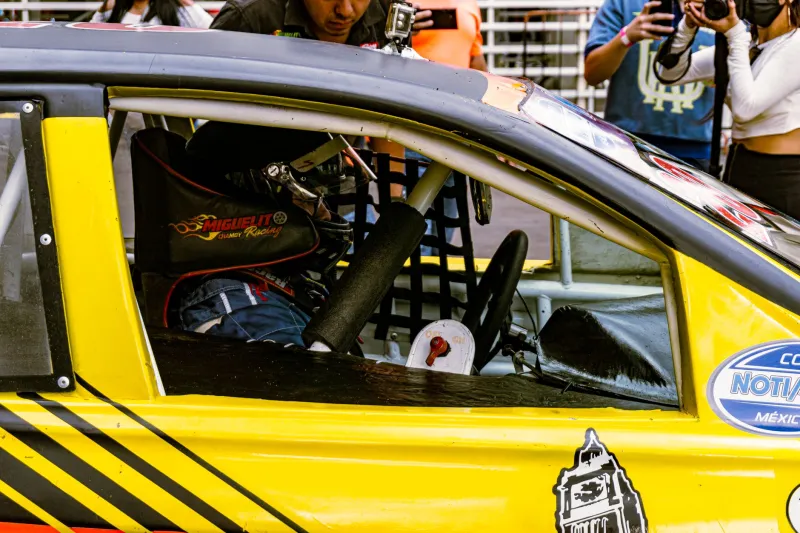
Let's start with the obvious: a racing helmet is the most personal piece of equipment a driver owns. It's literally what they see the world through at 200 miles per hour. Suits get shared, swapped, and repurposed. Cars get rebuilt, resprayed, and resold across multiple teams. But a helmet? That's custom-fitted, custom-painted, and almost always tied to a single driver's identity in a way nothing else is.
When collectors talk about provenance — the documented chain of ownership that proves a piece is the real deal — helmets carry some of the cleanest paper trails in the sport. Many were gifted directly to crew members, sponsors, or fans by the drivers themselves. Others were auctioned for charity, pulled from the cockpit and handed over personally. That kind of origin story is worth real money.
Add in the fact that helmets are visually striking in a way that other gear simply isn't. A fire suit hanging on a wall reads as fabric. A helmet on a display stand reads as sculpture. Collectors and interior designers alike have figured this out, which means demand is coming from two entirely different directions at once.
The Livery Factor: Wearable Art With a Racing Pedigree
One thing that separates helmets from almost every other collectible is the livery — the painted design that makes each lid instantly recognizable. Think about Ayrton Senna's yellow and green design, or the stars-and-stripes themes that American drivers have leaned into over the decades. These aren't just color schemes. They're visual identities that fans associate with specific moments, specific seasons, specific wins.
In the American racing scene, this has played out in some fascinating ways. NASCAR drivers have long used helmet designs to reflect sponsors, regional pride, and personal branding. An authentic helmet from a championship-winning season, featuring the original livery in solid condition, isn't just a piece of equipment — it's a portable snapshot of a moment in time.
Restorers and forgers have taken notice, which is why condition and documentation matter so much. An unrestored helmet with original paint, even if it's scuffed and scratched from actual use, is almost always worth more than a touched-up version that looks cleaner. The wear tells the story. Collectors know this, and serious buyers pay a premium for it.
The Numbers Behind the Obsession
Auction results over the past decade tell a pretty clear story. Helmets worn by legendary drivers during iconic seasons have regularly cleared six figures, with the most storied examples pushing well beyond that. Compare that to signed photographs or die-cast models from the same era, and the gap is enormous.
Part of what drives the price ceiling so high is simple scarcity. A driver might produce hundreds of signed photos over a career. They might wear a dozen different helmets across a single season, but only a fraction of those survive in documented, collectible condition. The supply is genuinely limited in a way that manufactured merchandise never is.
For American collectors specifically, there's an added layer of regional pride that inflates values on home turf. A helmet worn at Daytona or Indianapolis carries a weight that transcends its physical form. These are places woven into the national motorsports identity, and anything connected to their biggest moments commands a premium that overseas buyers often don't fully account for.
Why Casual Fans Keep Sleeping On Them
Here's the honest truth about why helmets get overlooked: they're intimidating to buy. The price points at the top end are genuinely high, and the authentication process is more involved than picking up a signed diecast at a race weekend vendor. Casual fans default to what feels accessible — prints, hats, replica gear — because the barrier to entry is low.
There's also a display challenge. A helmet takes up real space and needs a proper mount or case to look right. It's not something you throw in a drawer or stack on a shelf. For collectors who haven't committed to a dedicated display setup, that friction is enough to push them toward easier wins.
But here's the flip side of that equation: the fans who do their homework and get into helmets early tend to be the ones sitting on the most significant gains years later. Because while everyone else was chasing suits and photos, the helmet market was quietly doing its own thing — appreciating steadily, largely under the radar, with a collector base that's serious, knowledgeable, and not particularly interested in broadcasting what they know.
Getting Into the Game Without Getting Burned
If you're thinking about adding a helmet to your collection, a few things matter more than anything else. First, documentation. A helmet without a clear chain of ownership is a gamble no matter how good it looks. Push for photos, receipts, letters of authenticity — anything that ties the piece to a specific driver and a specific moment.
Second, condition assessment. Understand what you're buying. Original paint is king. Cracks, repairs, and repaints all affect value in different ways, and a seller who can't explain the history of any restoration work is a seller worth walking away from.
Third, think about the era and the driver. Mid-century helmets from the early days of American oval racing carry a different collector profile than modern composite lids from the last decade. Both have markets, but they're different markets with different buyers and different growth trajectories.
And if the six-figure stuff feels out of reach right now? That's fine. There's a legitimate mid-market for helmets from regional racing, short tracks, and lower-tier professional series that doesn't get nearly enough attention. Not every helmet needs a championship pedigree to be worth owning and worth appreciating.
The Helmet Isn't Just a Collectible — It's a Conversation
At the end of the day, what makes a vintage racing helmet compelling isn't just the money. It's what it represents. Every scratch on the visor, every scuff on the shell — that's evidence of something real happening at real speed. The car might be in a museum. The suit might be behind glass. But a helmet, properly displayed in your garage or your collection room, puts the driver's perspective right there in front of you.
That's not nothing. In a market full of mass-produced replicas and limited-edition drops, something that was actually there — actually worn, actually used — carries a weight that no amount of official licensing can replicate.
The paradox isn't really a paradox at all, once you understand it. The helmet is worth more because it was closer to the moment than anything else. And moments, in this hobby, are everything.