Checkered Flag Returns: How Savvy Fans Are Treating Racing Memorabilia Like a Stock Portfolio
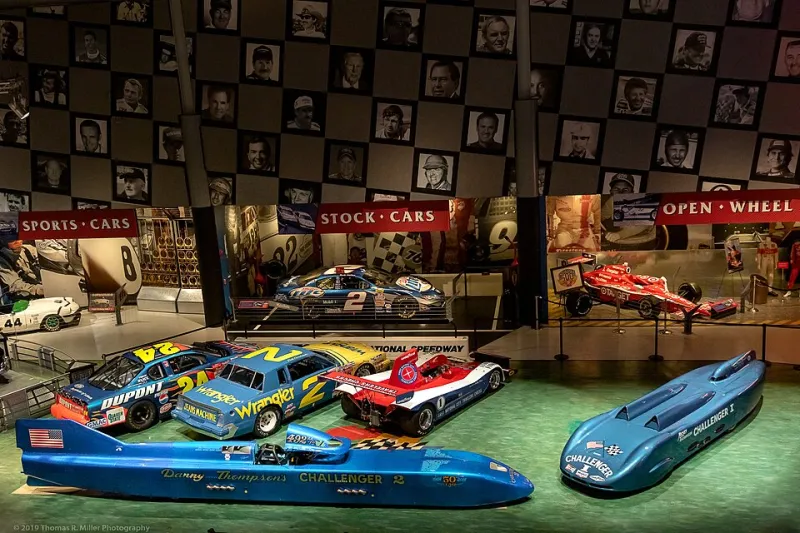
Photo: WillRStroh97, CC BY-SA 4.0, via Wikimedia Commons
There's a guy in Ohio who bought a signed Dale Earnhardt Sr. die-cast in 1995 for about $40. Today, that same piece — still in the original box, certificate of authenticity intact — is valued somewhere north of $600. That's not a fluke. That's a pattern. And a growing number of motorsports fans across the country are waking up to the idea that their passion for racing can double as a legitimate investment strategy.
Welcome to what collectors are calling the pit stop economy: a corner of the alternative investment world where horsepower meets hard cash.
More Than a Hobby
For decades, sports memorabilia has been treated as a legitimate asset class. Baseball cards, game-worn jerseys, signed basketballs — these items have moved from bedroom shelves to serious auction houses. Racing memorabilia has largely followed the same trajectory, just on a slightly longer timeline.
The numbers are starting to turn heads. A race-worn firesuit from a championship season can command five figures at auction. Vintage NASCAR programs from the early Daytona years regularly sell for multiples of their original cover price. Signed helmets from Formula 1 legends have cleared six figures in some cases. Meanwhile, platforms like Heritage Auctions and Barrett-Jackson have legitimized the space, bringing in institutional-level attention.
What's changed? A few things. The generation that grew up watching Jeff Gordon, Tony Stewart, and Dale Jr. in their prime is now in their 30s and 40s — with disposable income and nostalgia to burn. At the same time, grading services like PSA and Beckett have expanded into racing memorabilia, giving buyers a standardized way to assess condition and authenticity. That infrastructure matters enormously when you're treating a collection like a portfolio.
What Actually Appreciates
Not everything with a checkered flag on it is going to make you money. The difference between a casual fan purchase and an investment-grade piece usually comes down to a handful of factors.
Driver legacy and cultural weight. Pieces tied to drivers who defined an era — Earnhardt, Petty, Andretti, Foyt — tend to hold and grow value more reliably than items from drivers with shorter careers or lower name recognition. Death, unfortunately, is also a market factor. Items connected to drivers who passed away at the height of their fame often see dramatic appreciation.
Condition and provenance. A signed poster that's been rolled up in a closet for twenty years is worth considerably less than one that's been professionally framed and stored. Provenance — the documented history of where a piece came from and who owned it — is everything. A firesuit with a letter of authenticity from the team, or a helmet that came directly from a driver's personal collection through an estate sale, carries far more value than one sold at a gas station gift shop.
Scarcity. Limited-edition die-casts, race-used parts, and one-of-a-kind items beat mass-produced merchandise every time. If you can buy it at any track gift shop on any given race weekend, it's fan gear. If fewer than 500 exist and they're tied to a specific historic moment, you're in investment territory.
Moment significance. Items connected to milestone races — a first championship, a record-setting run, a famous crash that made history — carry a premium that only grows as time passes. The 2001 Daytona 500 is a painful example. Memorabilia connected to that race has seen consistent appreciation for over two decades.
Collectors Who've Done the Math
Talk to serious collectors and they'll tell you they didn't start out thinking about returns. They started out loving the sport. But over time, the financial upside became impossible to ignore.
One collector based in Charlotte — ground zero for NASCAR culture — started buying race-used sheet metal and lug nuts in the mid-2000s. He focused on obtaining pieces directly from team garages, building relationships with crew members and team PR reps. Today, his collection includes door panels from championship-winning cars, all with documented chain of custody. He's been approached by buyers offering three to four times what he paid for several pieces. He hasn't sold yet. He's treating it like real estate — hold for the long term.
Another fan from the Midwest built his portfolio around vintage racing programs and press kits from the 1960s and 70s. He found that paper ephemera was dramatically undervalued compared to hardware and signed items. A 1969 Indianapolis 500 official program in excellent condition? You might have paid a quarter for it back then. Today, depending on condition, it could fetch $200 to $400 from the right buyer.
Building a Smart Collection
If you're looking to start treating your collection like a portfolio, here's where experienced collectors say to begin.
Start with what you know. If you bleed NASCAR, stay in your lane initially. Your existing knowledge of drivers, eras, and significant moments gives you an edge when spotting undervalued pieces.
Get everything graded. PSA, JSA, and Beckett all offer authentication and grading services. A graded item is dramatically easier to sell and commands significantly higher prices. Think of grading as adding a standardized label to your investment.
Document everything obsessively. Save every receipt, every certificate of authenticity, every photo of where you bought something. Provenance is money.
Buy the best you can afford. A single high-quality, well-documented, condition-graded piece is worth more as an investment than ten mediocre ones. Depth of quality beats breadth of quantity every time in this market.
Watch the auction houses. Heritage Auctions, Mecum, and others run motorsports-specific sales regularly. Studying realized prices is the best market research available to you.
The Corner Store Take
Here at Last Lap Corner Store, we've always believed that racing memorabilia is more than decoration — it's history you can hold in your hands. The fact that it can also appreciate over time? That's just a bonus lap. Whether you're a die-hard fan looking to start being more intentional about what you buy, or someone who wants to dip a toe into alternative investments through something you actually care about, the pit stop economy has room for you.
Just do your homework before you open your wallet. The best investments in this space aren't impulse buys — they're the result of patience, research, and a genuine love for the sport.